RoadRunner Retro LLC
Retroreflectivity Data · MUTCD Compliance

Precision Retroreflectivity Data Collection

At RoadRunner Retro, we specialize in gathering precise retroreflectivity data for pavement markings. Helping public and private sectors comply with safety standards and improve roadway safety.
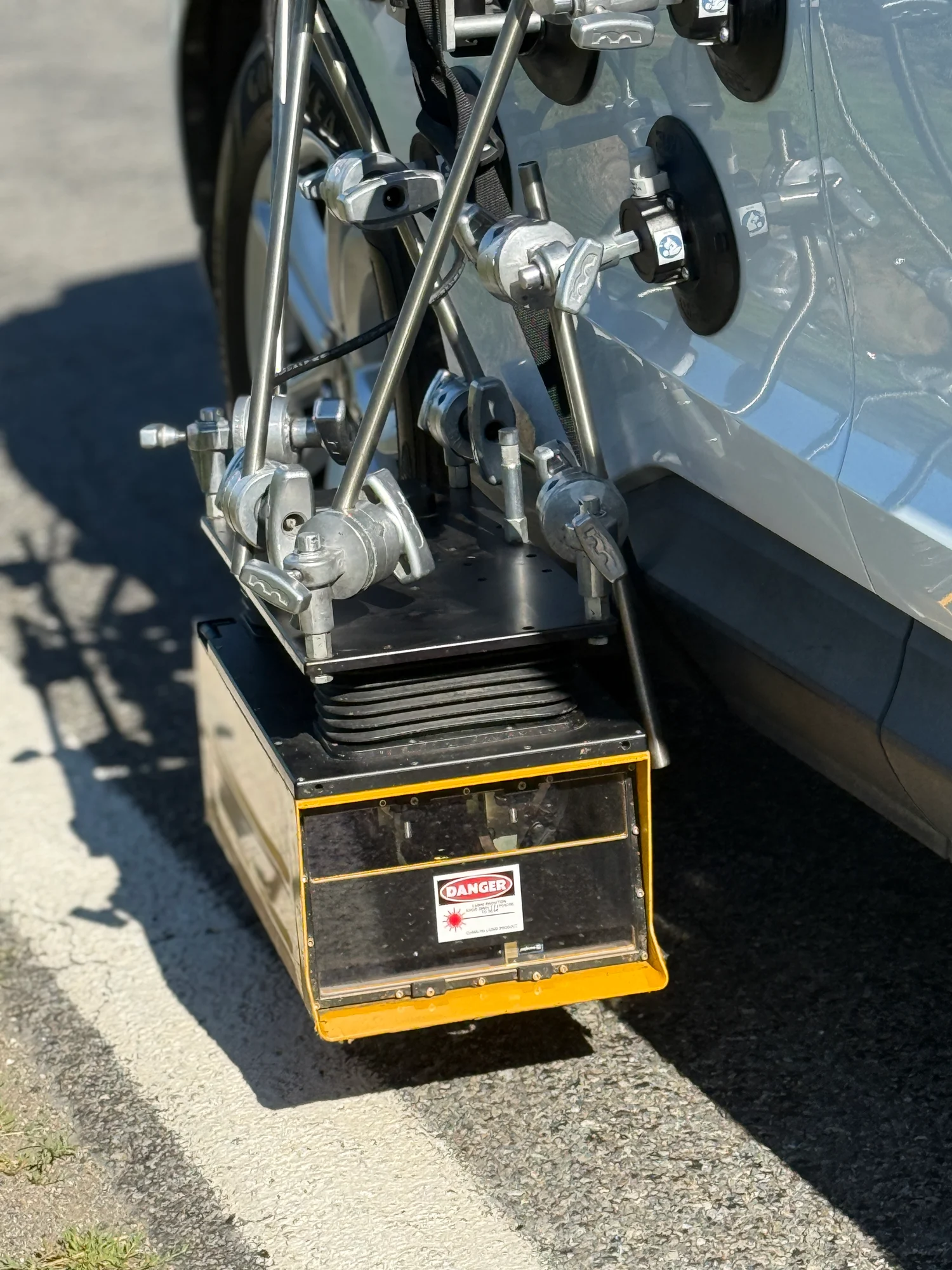
Road Vista Laserlux G7 retroreflectometer mounted on a survey vehicle
Laserlux G7
Mobile & handheld retroreflectometry
Highway-speed
Collected in live traffic, no lane closures
All 50 states
Equipped to deploy nationwide
KML + CSV
Deliverables built for DOT workflows

MUTCD Compliance Deadline

Are Your Pavement Markings Ready?

New federal retroreflectivity standards take effect September 5, 2026. Make sure your pavement markings meet compliance requirements.

days until the federal deadline

September 5, 2026 · longitudinal pavement markings

50mcd/m²/lux

Roads 35+ mph

Minimum 50 mcd/m²/lux for longitudinal markings on roads with speed limits of 35 mph or greater (where AADT ≥ 6,000 vehicles/day)

100mcd/m²/lux

Roads 70+ mph

Minimum 100 mcd/m²/lux for longitudinal markings on roads with speed limits of 70 mph or greater

Why this matters

Improved Safety: These standards will help reduce transportation-related fatalities and serious injuries

ADAS Support: High-quality markings are critical for Advanced Driver Assistance Systems and autonomous vehicles

Applies To: Longitudinal pavement markings (edge lines, center lines, lane lines)

Excluded: Symbols, arrows, chevrons, words, crosshatches, transverse markings, and crosswalks

Start planning now. Our mobile retroreflectivity data collection helps you efficiently assess your current pavement markings and plan for compliance.

Learn more about requirements at mutcd.fhwa.dot.gov

Data Collection Services

Our data collection methods ensure accurate measurement of pavement marking visibility, transforming raw data into comprehensive, actionable reports tailored to your specific needs.

Mobile Collection

Using Road Vista Laserlux® G7 mobile retroreflectometers for data collection that flows with typical traffic patterns.

Handheld Collection

We also offer handheld collection as needed for areas requiring more detailed or targeted measurement approaches.

Custom Reports

Customized reports and analysis of your retroreflectivity data—we can offer a multitude of solutions for your needs.

Data Synthesis & Visualization

Already collecting retroreflectivity data in-house? We turn your raw readings into clean maps, reports, and pass/fail analysis—even when the data isn't ours.

About RoadRunner Retro

RoadRunner uses Road Vista Laserlux® G7 mobile retroreflectometers for data collection that flows with typical traffic patterns. We also offer handheld collection as needed.

  • Equipped to readily service any state with our team of drivers
  • Scheduling flexibility—we know road management is unpredictable
  • Contact us for specific project requests to gauge availability
RoadRunner Retro LLC logo

Frequently Asked Questions

Retroreflectivity, MUTCD compliance, and how our data collection works.

What is retroreflectivity?
Retroreflectivity is the optical property that sends a vehicle's headlight beam back toward the driver's eyes rather than scattering it. It is what keeps pavement markings and road signs visible at night without any power source of their own. It is measured in millicandelas per square meter per lux (mcd/m²/lux).
What are the new MUTCD minimum pavement marking retroreflectivity requirements?
Effective September 5, 2026, the FHWA requires road agencies to maintain minimum retroreflectivity for longitudinal pavement markings: at least 50 mcd/m²/lux on roads with speed limits of 35 mph or greater (where AADT is 6,000 or more), and at least 100 mcd/m²/lux on roads with speed limits of 70 mph or greater. The rule applies to edge lines, center lines, and lane lines. It excludes symbols, arrows, words, chevrons, crosshatches, transverse markings, and crosswalks.
How is pavement marking retroreflectivity measured?
RoadRunner Retro measures it with a Road Vista Laserlux G7 mobile retroreflectometer that collects data at normal highway speed while flowing with traffic, plus handheld units for targeted spot checks. Readings are delivered as KML and CSV reports so agencies can see exactly which markings pass or fall below the minimum thresholds.
What services does RoadRunner Retro provide?
RoadRunner Retro provides professional retroreflectivity data collection for pavement markings, including mobile data collection with the Laserlux G7, handheld collection for detailed or targeted areas, and custom reports and analysis tailored to each agency's needs. We also offer standalone data synthesis and visualization: if you already collect retroreflectivity data in-house, we can process it into clean maps, reports, and pass/fail analysis.
What areas does RoadRunner Retro serve?
RoadRunner Retro is equipped to service any U.S. state with its team of drivers. Scheduling is flexible because road management timelines are unpredictable. Contact us with specific project requests to gauge availability.
Why does pavement marking retroreflectivity matter?
Adequate retroreflectivity reduces nighttime crashes by giving drivers more time to react, keeps agencies compliant with federal MUTCD standards, and supports Advanced Driver Assistance Systems and autonomous vehicles that rely on clearly visible lane markings.

Get In Touch

Ready to start a project or have questions about our services? Contact us to discuss your retroreflectivity data collection needs.